
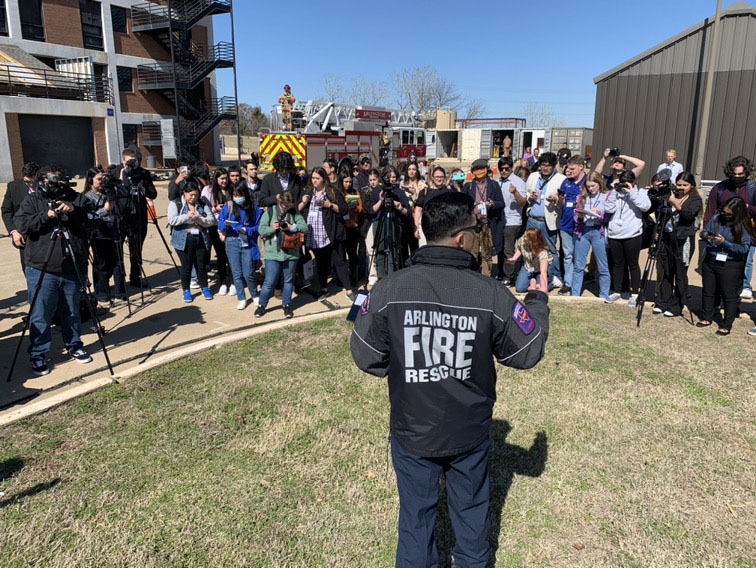
Live contests are one of the highlights of the TIPA convention. Students go head to head against their peers in 30 categories featuring real-world scenarios. Only one student per school may compete in each category, except in two-person photo essay and the multimedia contest. Contest descriptions are below. Go to the registration form to sign up for the competitions.
General Rules for All Contests
Contestants must not use ChatGPT or other forms of AI to write any portion of their work. They may use transcription software such as Otter to transcribe interviews or Grammarly to check spelling, grammar and punctuation. Hard copy AP Style books may be used for all contests. Students are responsible for providing their own AP Stylebooks, computers, camera equipment and any other reporting materials needed. Drones are not allowed in the News, Feature and Sports contests.
1: Print News Writing
Description: Contestants may cover a news event (real or created), witness a situation, view an activity (event, situation or activity may be live or a video presentation) and/or work from documents and related materials.
Information about the event/scenario will be provided to the contestants through a general announcement or a contest card. Contestants must be ready to adapt to any “breaking” news that may occur during the scheduled event. A news conference will take place at the location after the event. Contestant should include a headline which will be considered by judges to break ties.
2: Radio News Writing:
Contestants may cover a news event (real or created), witness a situation, view an activity (event, situation or activity may be live or a video presentation) and/or work from documents and related materials. Either a general announcement will be made or contestants may be given a contest card with little information about what they are covering. Contestants must be ready to adapt to any “breaking” news that may occur during the scheduled event. News scripts must follow proper broadcast format for radio – split into two columns with text on one side and technical instructions on the other. Contestant should include a headline which will be considered by judges to break ties.
3: TV News Writing:
Contestants may cover a news event (real or created), witness a situation, view an activity (event, situation or activity may be live or a video presentation) and/or work from documents and related materials. Either a general announcement will be made or contestants may be given a contest card with little information about what they are covering. Contestants must be ready to adapt to any “breaking” news that may occur during the scheduled event. News scripts must be no longer than 60 seconds and follow proper broadcast format for TV – split into two columns with text on one side and technical instructions on the other. Contestant should include a headline which will be considered by judges to break ties.
4: Spanish News Writing:
Contestants may cover a news event (real or created), witness a situation, view an activity (event, situation or activity may be live or a video presentation) and/or work from documents and related materials. Information about the event/scenario will be provided to the contestants through a general announcement or a contest card. Contestants must be ready to adapt to any “breaking” news that may occur during the scheduled event. A news conference will take place at the location after the event. Spanish news stories may be written in normal print format. Contestant should include a headline which will be considered by judges to break ties.
5: Live Video News:
Contestants are taken to a news event/scenario where they must put their multimedia journalist skills to the test. Either a general announcement will be made or contestants may be given a contest card with little information about what they are covering. Contestants must shoot their own video and gather b-roll. They also must be ready to adapt to any “breaking” news that may occur during the scheduled event. Upon the conclusion of the news event, contestants have a couple of hours to produce a news package about the event/scenario. News packages must follow proper broadcast format and be submitted in a readable video file (MP4 or MOV preferred) no longer than two minutes. No script is required.
6. Editing:
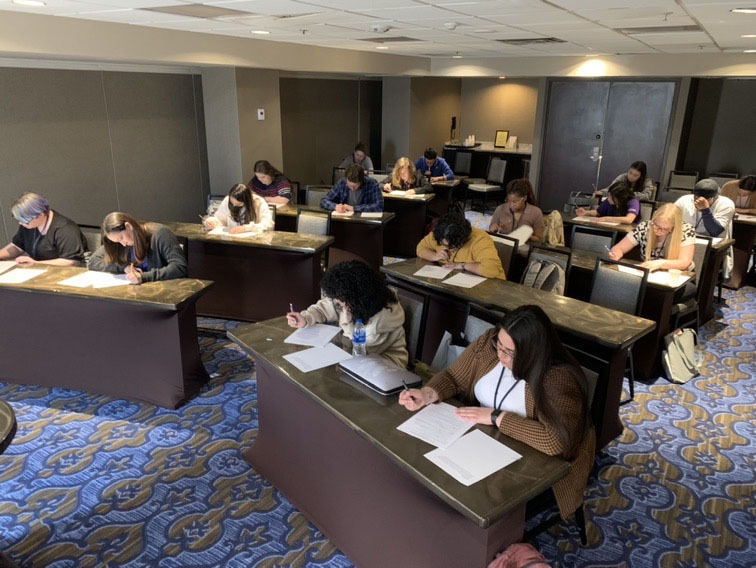
Contestants must complete a copy-editing test and write headlines. Contestants must edit the material as instructed for items such as, but not limited to, AP Style, wordiness, capitalization, punctuation, grammar, spelling, accuracy, engagement and more. Contest directions will be given on site.
8: Print Sports Writing:
Contestants are taken to a sports event where they must put their reporter skills to the test. A general announcement will be made as to what sport event they will be attending. Contestants will watch the entirety of the sports event and have the chance to ask questions during a press conference. Upon the conclusion of the sports event, contestants have one hour to write a game coverage story. Sports stories must follow normal print format. Sports terminology and technical wording is encouraged. Contestant should include a headline which will be considered by judges to break ties.
9: Radio Sports Writing:
Contestants are taken to a sports event where they must put their reporter skills to the test. A general announcement will be made as to what sport event they will be attending. Contestants will watch the entirety of the sports event and have the chance to ask questions during a press conference. Upon the conclusion of the sports event, contestants have one hour to write a game recap script with a runtime no longer than 60 seconds. Contestant should include a headline which will be considered by judges to break ties.
10: TV Sports Writing:
Contestants are taken to a sports event where they must put their reporter skills to the test. A general announcement will be made as to what sport event they will be attending. Contestants will watch the entirety of the sports event and have the chance to ask questions during a press conference. Upon the conclusion of the sports event, contestants have one hour to write a game recap script with a runtime no longer than 60 seconds. Contestant should include a headline which will be considered by judges to break ties.
12: Print Advertising:
Contestants have one hour to create a print advertisement for a given product or service. Each contestant must bring their own laptop with the editing software of their choice to create a print advertisement. Contestants will be provided with a ZIP file containing materials to create the advertisement as well as a document with brief information about the product/service. Final print advertisements must be submitted in JPG format.
13: Radio Advertising:
Contestants must create two 30-second radio advertisements for a given product or service. Contestants will write the script for the advertisement following proper broadcast format for radio – advertisement copy and technical instructions. Contestants will be provided with brief information about the product/service. Final radio advertisements must be submitted via a Word document.
14: TV Advertising:
Contestants must create 10-second and 30-second TV advertisements for a given product or service. Contestants will create a storyboard for the advertisement following proper broadcast format for advertisements — storyboards with sketches and technical instructions. Contestants will be provided with brief information about the product/service. Final TV advertisements (storyboard sheet) will be submitted to judges.
15: Editorial Cartoon:
Contestants have one hour to create an editorial cartoon about a given scenario/news development. Contestants will be given a document with different perspectives about a specific scenario/news development. Contestants will sketch out an editorial cartoon that clearly states a stance. They may use pen and paper or any other editing software to create the editorial cartoon.
16: Editorial Writing:
Contestants have one hour to write an editorial piece about a given scenario/news development. Contestants will be given a document with different perspectives about a specific scenario/news development. Contestants will write an opinion piece that clearly states a stance. Final editorial writing entries must be submitted via a Word document.
17: Feature Writing:
Contestants will be taken to a part of town where they will have one hour to search for and find a feature story of their choosing. They will receive a specific theme for the feature story. During that time, contestants must gather their interviews and any other element needed to complete their feature story. Upon returning, contestants will have one hour to complete their feature story. Final feature writing entries must be submitted via a Word document. Headlines will be required for the feature story.
18: Radio Announcing:
Contestants will be provided with a script and have five minutes to review its content. Afterward, contestants will go into a room and record/perform an announcement. The recording/performance may take place in front of judges and other contestants.
19: TV Announcing:
Contestants will be provided with a script and have five minutes to review its content. Afterward, contestants will go into a room and record/perform an announcement. The recording/performance may take place in front of judges and other contestants. Contestants must be dressed as if they were going to make the announcement live on TV.
20: TV Announcing Spanish:
Contestants will be provided with a script in Spanish and have five minutes to review its content. Afterward, contestants will go into a room and record/perform an announcement. The recording/performance must be delivered in Spanish and may take place in front of judges and other contestants. Contestants must be dressed as if they were going to make the announcement live on TV.
21: Critical Review:
Contestants will attend a showing of a fine arts event, which includes, but is not limited to, a play, movie or concert. During that time, contestants will view, listen and/or take notes of the event. Upon returning, contestants will have one hour to write a review of the fine arts event. Final critical review entries must be submitted as a Word document. Contestant should include a headline which will be considered by judges to break ties.
22: PR Release Writing:
Contestants have one hour to write a news release about a given news development/announcement. Contestants will be given a document with information regarding the news development/announcement and quotes from sources. They will then write a release that follows proper PR news writing format, including technical terms and symbols. Final PR release writing entries must be submitted via a Word document.
23: PR Crisis Management:
Contestants have one hour to develop a crisis management plan about a given scenario/news development. Contestants will be given a document with information regarding the scenario/news development and instructions of who to address the plan to. They will then develop a crisis management plan that follows proper public relations format, which includes, but is not limited to, steps to take, technical terms and symbols. Final PR crisis management entries must be submitted via a Word document.
24: News Photography:
Contestants are taken to a news event/scenario where they must put their photojournalist skills to the test. Either a general announcement will be made or contestants may be given an index card with little information about what they are covering. Contestants must be ready to adapt to any “breaking” news that may occur during the scheduled event. Upon the conclusion of the news event, contestants have one hour to select a photo and write a cutline. Photos must not be edited in any way. Submission must be in JPG format. Judges may use cutlines to break ties. Students are responsible for bringing relevant editing software and equipment.
25: Feature Photography:
Contestants will be taken to a part of town where they will have one hour to search for and find a feature photo of their choosing. There is no specific requirement for what the feature story must focus on. During that time, contestants may take as many shots as they deem necessary and gather other elements needed to complete their feature photo assignment. Upon returning, contestants will have one hour to submit their feature photo that includes a cutline. Photos must not be edited in any way. Submission must be in JPG format. Judges may use cutlines to break ties. Students are responsible for bringing relevant editing software and equipment.
26: Sports Action Photo:
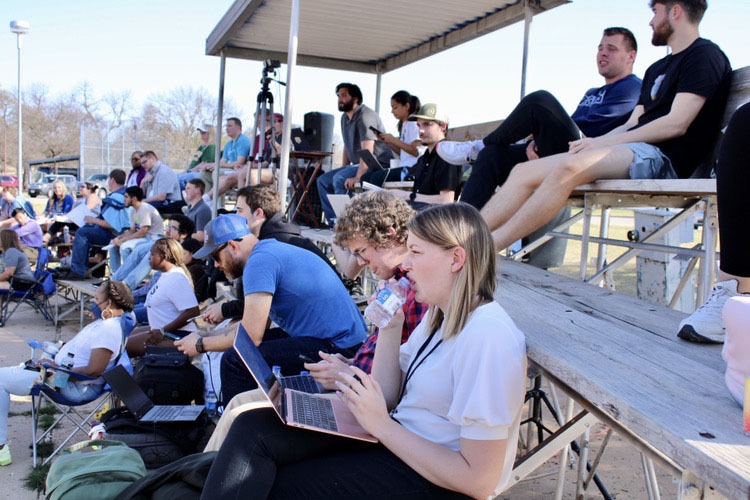
Contestants are taken to a sports event where they must put their photojournalist skills to the test. A general announcement will be made as to what sport event they will be attending. Contestants will watch the entirety of the sports event and capture photos from a designated area. Judges may use cutlines to break ties. Students are responsible for bringing relevant editing software and equipment.
27: 2-Person Photo Essay:
Contestants will be taken to a part of town where they will have one hour to search for and shoot a series of photos for their photo essay. There is no specific requirement for what the photo essay must focus on. During that time, contestants may take as many shots as they deem necessary and gather other elements needed to complete their photo essay assignment. Judges may use cutlines to break ties. Students are responsible for bringing relevant editing software and equipment.
28: Newspaper Design
Contestants have one hour to create a front page of a (broadsheet) newspaper. Each contestant must bring their own laptop with the editing software of their choice to create the front page. Contestants will be provided with a ZIP file containing materials to create a front page that includes photos, text and newspaper flag. Final page designs must be submitted in PDF format.
29: Magazine Design
Contestants have one hour to create a magazine spread. Each contestant must bring their own laptop with the editing software of their choice to create the spread. Contestants will be provided with a ZIP file containing materials to create a spread that includes photos and text. Final page/spread designs must be submitted in PDF format.
30: Social Media Features
Using a smartphone and CapCut or another editing application, produce an Instagram Reel that includes B-roll, A-roll (interviewee sound bite), a standup, voice-over and correct captions/subtitles. Can work as individuals or a team of two. Reels will be judged on human interest, delivery and overall production. Must turn in a written script/text version of reporting, and writing should conform to broadcast writing principles (e.g. active voice, concise sentences, etc.). Students must complete the entire production on site at the convention site.